
The training that reshaped my posture
I do not recall a single moment when the call of God announced itself clearly. Instead, it emerged gradually, through quiet unease and reflection, becoming intelligible only with time. I have learned that God often forms purpose patiently, allowing meaning to unfold rather than insisting upon immediate certainty. For many years, my vocation was centred in the lecture room. Teaching philosophy immersed me in questions of meaning, responsibility, and human dignity. Yet even as I engaged students intellectually, I sensed…
I do not recall a single moment when the call of God announced itself clearly. Instead, it emerged gradually, through quiet unease and reflection, becoming intelligible only with time. I have learned that God often forms purpose patiently, allowing meaning to unfold rather than insisting upon immediate certainty.
For many years, my vocation was centred in the lecture room. Teaching philosophy immersed me in questions of meaning, responsibility, and human dignity. Yet even as I engaged students intellectually, I sensed a growing dissonance. Teaching alone no longer felt sufficient. Something deeper was being asked of me, though I lacked the language to name it.
An afternoon in Kibera brought this tension into focus. Children moved easily through narrow paths between homes, laughter rising amid visible fragility. Standing there, I found myself confronted by an unplanned question: What does faith mean where tomorrow cannot be assumed? That question stayed with me. It followed me into prayer, into Scripture, and into a period of serious discernment.
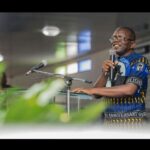
My engagement with Axx came at a critical moment. While I anticipated theological refinement, the training reshaped my posture as a pastor. Scripture slowed me down, challenged familiar assumptions, and clarified the responsibility inherent in Christ’s promise of abundant life. Ministry, I came to see, requires attentiveness not only to belief but also to the conditions that shape daily existence.
As I now seek further theological formation, my hope is modest but firm: to serve wisely, to teach faithfully, and to nurture a community where spiritual growth and dignified livelihood coexist. I envision a church where children approach Scripture with curiosity, where young people discover purpose before despair takes hold, and where families find reasons to hope beyond survival.
I cannot predict how the future will unfold. Yet I hold quietly to the assurance that God completes the work He begins. If this testimony carries any weight, it is simply this: God has been patient with me. I am still learning to walk attentively, trusting that each step draws us closer into the light we are called to reflect.
Jordan Church of Holy Light emerged quietly from this discernment. The congregation was small, yet marked by sincerity and resilience. I encountered faith expressed in simple but profound ways: shared meals, whispered prayers, and a steady refusal to surrender hope despite economic uncertainty. These experiences deepened my conviction that the Gospel must speak to both spiritual formation and human dignity.
Jordan Church of Holy Light emerged quietly from this discernment. The congregation was small, yet marked by sincerity and resilience. I encountered faith expressed in simple but profound ways: shared meals, whispered prayers, and a steady refusal to surrender hope despite economic uncertainty. These experiences deepened my conviction that the Gospel must speak to both spiritual formation and human dignity.